0%

Table of Contents

Hydroxypropyl methylcellulose (HPMC) formulation is a critical element in numerous industries, ranging from pharmaceuticals and food to construction and textiles. Globally, the demand for HPMC is steadily increasing, driven by its versatile properties as a binder, thickener, film-former, and protective colloid. Understanding hpmc formulation isn't just about chemical composition; it's about enabling efficient manufacturing processes, improving product quality, and developing innovative applications across diverse sectors. This knowledge is essential for maintaining competitiveness and addressing emerging market needs.

The growing complexity of formulations demands a deep understanding of how different grades of HPMC interact with other ingredients. This is particularly important in sensitive applications like drug delivery, where precise control over release rates and stability is crucial. Challenges arise from factors like varying raw material quality, inconsistent manufacturing practices, and evolving regulatory requirements. Mastering hpmc formulation empowers businesses to overcome these hurdles and deliver safe, effective, and reliable products.

Consequently, advancements in hpmc formulation directly impact global supply chains, product development cycles, and ultimately, consumer well-being. Investing in research, optimizing processes, and adopting sustainable practices in hpmc formulation are vital for long-term success and responsible innovation.
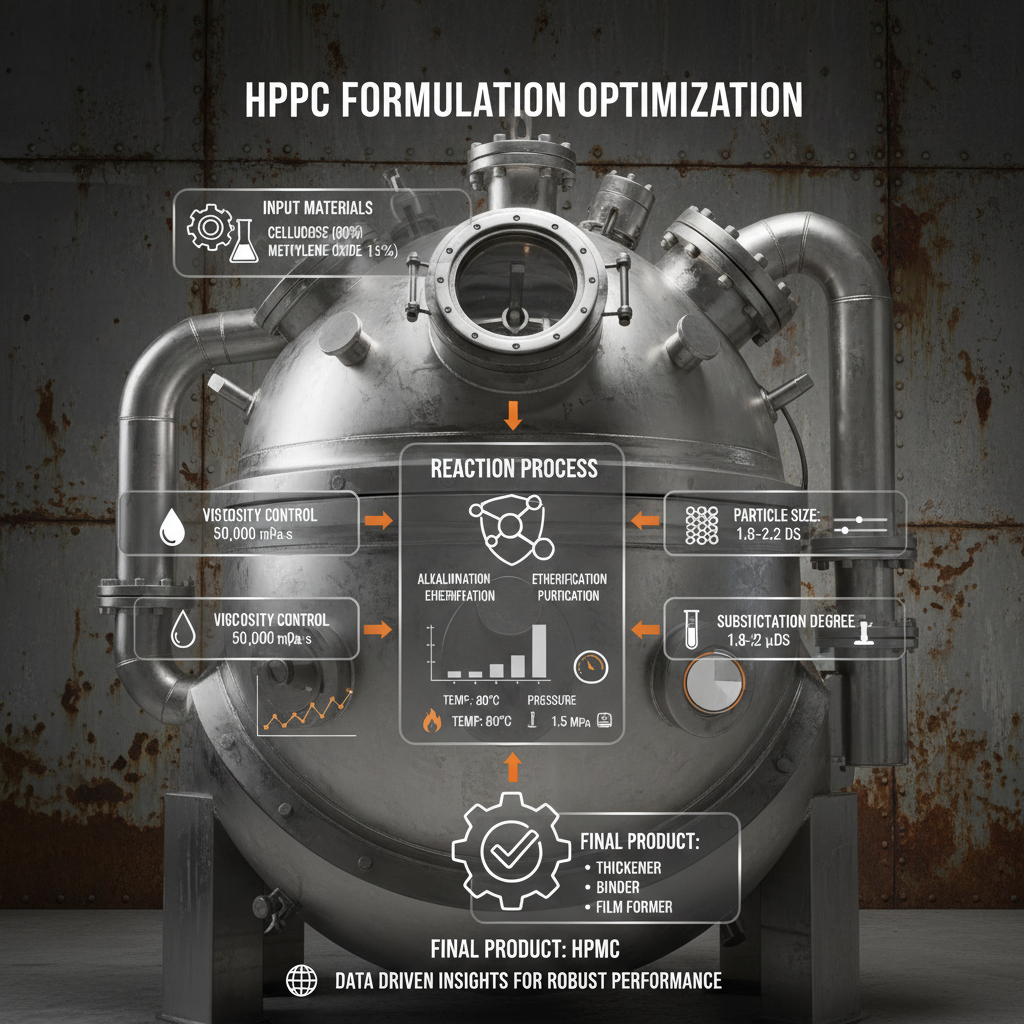
Advancements in HPMC Formulation Impacting Industries Globally

The Fundamentals of hpmc Formulation

Advancements in HPMC Formulation Impacting Industries Globally

Successful hpmc formulation hinges on a nuanced understanding of its properties and how they interact with other ingredients. Viscosity, gelation temperature, and solubility are key parameters that must be carefully controlled. Achieving optimal performance requires selecting the appropriate grade of HPMC, considering its molecular weight and degree of substitution.

Furthermore, factors like pH, temperature, and shear rate can significantly influence the behavior of HPMC in a formulation. Therefore, thorough testing and characterization are essential throughout the development process. This ensures stability, consistency, and desired functional properties.

Defining hpmc Formulation and Its Relevance

HPMC formulation refers to the process of combining hydroxypropyl methylcellulose with other excipients and active ingredients to create a stable and effective product. It’s far more than simply dissolving HPMC in a solvent; it involves careful consideration of compatibility, particle size, mixing techniques, and storage conditions. The goal is to achieve a specific set of characteristics – desired viscosity, controlled release, enhanced stability, and optimal bioavailability.

This process is vitally relevant across a broad spectrum of industries. In pharmaceuticals, it's critical for creating controlled-release tablets and coatings. In food, it acts as a thickener, stabilizer, and emulsifier. In construction, it improves the workability and water retention of cement-based materials. Its adaptability makes it indispensable in modern manufacturing.

The significance of precisely engineered hpmc formulation extends beyond simply meeting functional requirements. It directly impacts product performance, shelf life, and ultimately, consumer satisfaction.

Core Components Influencing hpmc Formulation

Several core components significantly impact hpmc formulation outcomes. First, the grade of HPMC itself plays a crucial role, with varying molecular weights and degrees of substitution affecting viscosity and gelation characteristics. Second, the choice of solvent and its quality are paramount, as impurities can disrupt the formulation process.

Thirdly, the addition of plasticizers, such as glycerol or propylene glycol, can improve film flexibility and reduce brittleness. Fourth, pH adjustment is often necessary to optimize HPMC solubility and stability. Fifth, the inclusion of other excipients, like surfactants or antioxidants, can further enhance formulation performance.

Finally, the mixing process is critical for ensuring uniform distribution of ingredients and preventing agglomeration. Proper mixing parameters, including speed and duration, must be carefully optimized for each specific formulation.

Practical Applications of hpmc Formulation

HPMC formulation finds widespread use in the pharmaceutical industry for creating matrix tablets that provide controlled drug release. By controlling the rate of HPMC hydration and erosion, drug release profiles can be tailored to specific therapeutic needs. This significantly improves patient compliance and treatment efficacy.

In the food industry, HPMC is used extensively as a thickener in sauces, soups, and dressings. It also acts as a stabilizer in ice cream and other frozen desserts, preventing ice crystal formation. Moreover, HPMC is utilized in gluten-free baking to provide structure and texture.

Comparative Performance of hpmc Formulation Methods


Global Impact and Industry Adoption

The demand for HPMC and sophisticated hpmc formulation techniques is particularly strong in Asia-Pacific, driven by the region's growing pharmaceutical and food industries. North America and Europe also represent significant markets, with a focus on high-quality, specialized formulations.

Major pharmaceutical companies worldwide rely on HPMC to enhance drug delivery systems. Food manufacturers utilize it to improve texture, stability, and shelf life. The construction industry increasingly adopts HPMC-based additives to improve the performance of cement-based products.

Advantages and Long-Term Value Proposition

The advantages of optimized hpmc formulation are multifaceted. Cost efficiency is a key benefit, as HPMC is relatively inexpensive and can reduce the need for other, more expensive ingredients. Sustainability is another advantage, as HPMC is derived from cellulose, a renewable resource.

From a social impact perspective, improved drug delivery through HPMC formulations can enhance patient outcomes and quality of life. Reliability and consistency in product performance build trust with consumers and establish brand loyalty.

Investing in advanced hpmc formulation techniques yields long-term value by driving innovation, reducing waste, and improving overall product quality.

Future Trends and Innovation in hpmc Formulation

Future trends in hpmc formulation point towards the development of “smart” HPMC systems that respond to specific stimuli, such as pH or temperature, to trigger drug release or modify product properties. The integration of nanotechnology to enhance HPMC dispersion and stability is another promising area of research.

Furthermore, the growing emphasis on sustainability is driving the development of bio-based HPMC alternatives and more environmentally friendly manufacturing processes. Automation and digital control systems are also being implemented to improve formulation precision and reduce variability.

Exploring the use of HPMC in 3D printing for personalized medicine and customized food products is also gaining traction, offering exciting possibilities for the future of hpmc formulation.

Challenges and Solutions in Optimizing hpmc Formulation Performance

Formulation Challenge Impact on Product Quality Proposed Solution Implementation Complexity (1-5)
HPMC Agglomeration Reduced Solubility & Viscosity Optimized Mixing & Dispersion Techniques 2
Inconsistent Viscosity Variable Product Texture & Performance Precise Grade Selection & Quality Control 3
Poor Drug Release Control Suboptimal Therapeutic Efficacy Matrix Formulation Optimization & Coating 4
Formulation Instability Reduced Shelf Life & Potency Addition of Stabilizers & Antioxidants 2
pH Sensitivity Issues Altered Solubility & Gelation pH Buffering Agents & Microencapsulation 3
Scale-Up Challenges Difficulty Replicating Lab Results Process Optimization & Pilot Studies 5

FAQS

What is the primary function of HPMC in a pharmaceutical tablet formulation?

HPMC primarily acts as a binder and controlled-release agent in pharmaceutical tablets. It forms a gel matrix upon hydration, slowing down drug dissolution and extending the release profile. This is critical for maintaining therapeutic drug levels over a longer period, improving patient compliance, and reducing dosing frequency. The grade and concentration of HPMC directly influence the release rate, allowing for tailored drug delivery systems.

How does the molecular weight of HPMC affect viscosity in a food application?

Generally, higher molecular weight HPMC leads to higher viscosity in solution. This is because longer polymer chains entangle more readily, increasing resistance to flow. In food applications, this translates to a thicker texture in sauces, soups, or desserts. However, factors like concentration, temperature, and the presence of other ingredients can also influence viscosity. Selecting the appropriate molecular weight HPMC is crucial for achieving the desired texture and stability.

Can HPMC be used as a vegan alternative to gelatin?

Yes, HPMC is an excellent vegan alternative to gelatin. It provides similar film-forming and thickening properties without using animal-derived products. This makes it suitable for a wide range of applications, including capsules, coatings, and desserts, catering to vegetarian and vegan consumers. It's widely accepted and approved for use in food and pharmaceutical products globally as a plant-based option.

What is the impact of pH on HPMC solubility?

HPMC exhibits different solubility characteristics depending on pH. It is generally more soluble in water at higher pH levels (alkaline conditions) and less soluble at lower pH levels (acidic conditions). This is due to the ionization of the hydroxyl groups on the polymer chain. Therefore, pH adjustment is often necessary to ensure complete dissolution and optimal performance of HPMC in a given formulation. Careful consideration of pH is vital for stable and effective formulations.

How do you prevent HPMC clumping during storage?

Preventing HPMC clumping during storage involves proper handling and storage conditions. Ensure the container is tightly sealed to prevent moisture absorption. Store HPMC in a cool, dry place away from direct sunlight and heat sources. Adding a small amount of a flow aid like silicon dioxide can also help to prevent clumping. Proper handling during dispensing is also important – avoid introducing moisture or excessive agitation.

What are the regulatory considerations for using HPMC in food and pharmaceutical applications?

HPMC is generally recognized as safe (GRAS) by regulatory bodies like the FDA for use in food applications. However, specific grades and purity levels must meet established standards. In pharmaceutical applications, HPMC must comply with pharmacopeial requirements outlined in USP, EP, and JP. Manufacturers must ensure proper documentation, quality control, and adherence to good manufacturing practices (GMP) to meet regulatory expectations and ensure product safety and efficacy.

Conclusion

In conclusion, mastering hpmc formulation is essential for innovation and success across a diverse range of industries. From optimizing drug delivery systems to enhancing food texture and improving construction materials, HPMC offers a versatile toolkit for addressing complex challenges. Understanding the interplay of its properties, selecting the appropriate grade, and employing precise formulation techniques are paramount.

Looking ahead, continued research and development in HPMC technology promise even more sophisticated applications. By embracing sustainability, exploring new functionalities, and leveraging digital advancements, we can unlock the full potential of this remarkable polymer and create products that are safer, more effective, and more environmentally responsible. Visit our website at www.cnjzchemical.com to learn more about our HPMC products and expertise.

Daniel Wilson

Daniel Wilson

Daniel Wilson is a Senior Technical Support Specialist at Jingzuan Chemical. He provides technical assistance to customers, addressing inquiries about product applications, troubleshooting formulation issues, and offering guidance on optimal usage. With a strong chemistry background and a passion for problem-solving, Daniel is a valuable resource for clients across various
Previous Exploring HPMC Full Form Hydroxypropyl Methylcellulose and Its Diverse Applications
Next Optimizing Wall Putty Performance with HPMC for Superior Finishes