
Jun . 13, 2024 15:26 Back to list
Hydroxyethyl Cellulose, a water-soluble polymer, is derived from cellulose.
Understanding Hydroxyethyl Cellulose (HEC) A Versatile Polymer Formula
Hydroxyethyl cellulose (HEC) is a non-ionic water-soluble polymer derived from cellulose, the most abundant organic polymer on Earth found primarily in plant cell walls. The chemical formula of HEC, though complex, reflects its structural composition and properties. It can be represented as (C6H10O5)n(C2H4O)x, where n represents the glucose units of cellulose and x denotes the hydroxyethyl groups attached to the cellulose backbone.
Cellulose, with its repeating unit of β-D-glucose linked by β-1,4-glycosidic bonds, is transformed into HEC through a chemical modification process known as etherification. This involves the substitution of some of the hydroxyl groups (-OH) on the cellulose chain with ethylene oxide (EO), which yields the hydroxyethyl group (-OCH2CH2OH). The extent of substitution, or the degree of hydroxyethylation, determines the properties of the final product.
The 'x' in the formula signifies this degree of substitution, which can vary between 10% to 90%. A higher value of 'x' indicates a higher content of hydroxyethyl groups, leading to better water solubility and viscosity properties. This makes HEC an adaptable material, suitable for a wide range of applications depending on the desired properties This makes HEC an adaptable material, suitable for a wide range of applications depending on the desired properties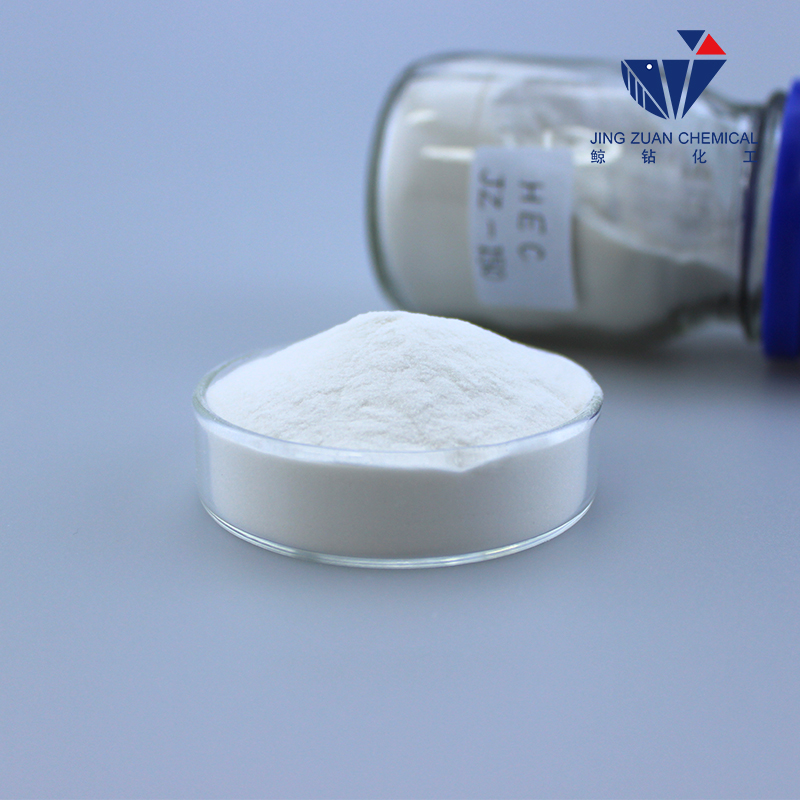 This makes HEC an adaptable material, suitable for a wide range of applications depending on the desired properties This makes HEC an adaptable material, suitable for a wide range of applications depending on the desired propertieshydroxyethyl cellulose formula.
In practical applications, HEC is valued for its thickening, suspending, emulsifying, and stabilizing properties. It is commonly used in various industries such as construction, where it is employed as a rheology modifier in cementitious materials; in pharmaceuticals, as a tablet binder and suspension agent; and in cosmetics, as a viscosity controller in lotions and shampoos.
Furthermore, HEC's non-toxic nature, biodegradability, and non-reactivity make it an environmentally friendly choice. Its ability to form clear solutions and its compatibility with both acidic and alkaline systems further enhance its utility.
In conclusion, the formula of hydroxyethyl cellulose not only encapsulates the chemistry behind its synthesis but also underscores its versatile applications. It is a testament to how scientific innovation can transform a natural substance into a highly functional material that significantly impacts various aspects of modern life. Despite its complexity, the HEC formula represents a harmonious blend of nature and technology, offering a sustainable solution in multiple industries.
This makes HEC an adaptable material, suitable for a wide range of applications depending on the desired properties This makes HEC an adaptable material, suitable for a wide range of applications depending on the desired propertieshydroxyethyl cellulose formula.
In practical applications, HEC is valued for its thickening, suspending, emulsifying, and stabilizing properties. It is commonly used in various industries such as construction, where it is employed as a rheology modifier in cementitious materials; in pharmaceuticals, as a tablet binder and suspension agent; and in cosmetics, as a viscosity controller in lotions and shampoos.
Furthermore, HEC's non-toxic nature, biodegradability, and non-reactivity make it an environmentally friendly choice. Its ability to form clear solutions and its compatibility with both acidic and alkaline systems further enhance its utility.
In conclusion, the formula of hydroxyethyl cellulose not only encapsulates the chemistry behind its synthesis but also underscores its versatile applications. It is a testament to how scientific innovation can transform a natural substance into a highly functional material that significantly impacts various aspects of modern life. Despite its complexity, the HEC formula represents a harmonious blend of nature and technology, offering a sustainable solution in multiple industries.
This makes HEC an adaptable material, suitable for a wide range of applications depending on the desired properties This makes HEC an adaptable material, suitable for a wide range of applications depending on the desired propertieshydroxyethyl cellulose formula.
In practical applications, HEC is valued for its thickening, suspending, emulsifying, and stabilizing properties. It is commonly used in various industries such as construction, where it is employed as a rheology modifier in cementitious materials; in pharmaceuticals, as a tablet binder and suspension agent; and in cosmetics, as a viscosity controller in lotions and shampoos.
Furthermore, HEC's non-toxic nature, biodegradability, and non-reactivity make it an environmentally friendly choice. Its ability to form clear solutions and its compatibility with both acidic and alkaline systems further enhance its utility.
In conclusion, the formula of hydroxyethyl cellulose not only encapsulates the chemistry behind its synthesis but also underscores its versatile applications. It is a testament to how scientific innovation can transform a natural substance into a highly functional material that significantly impacts various aspects of modern life. Despite its complexity, the HEC formula represents a harmonious blend of nature and technology, offering a sustainable solution in multiple industries. Latest news
-
Understanding Hydroxypropyl Methyl Cellulose MSDS Safety and Compliance
NewsApr.16,2026
-
Understanding the Hydroxypropyl Methyl Cellulose HS Code for Global Trade
NewsApr.09,2026
-
Comprehensive Guide to Hydroxypropyl Methyl Cellulose CAS Number and Applications
NewsApr.07,2026
-
Comprehensive Guide to Hydroxypropyl Methyl Cellulose cas no and its Diverse Applications
NewsApr.04,2026
-
Comprehensive Guide to Hydroxypropyl Methyl Cellulose Manufacturers and Applications
NewsMar.31,2026
-
Understanding Hydroxypropyl Methyl Cellulose Properties And Diverse Applications
NewsMar.28,2026
Related PRODUCTS