
Dec . 31, 2025 09:50 Back to list
Reliable HPMC Excipient for Industrial and Pharma Applications | Key Specs & Vendors
Understanding HPMC Excipient: A Longtime Industrial Insider’s View
Having worked in industrial equipment and materials supply for more than a decade, I’ve come across countless formulations and additives that seem straightforward until you really dig into them. HPMC excipient is one of those substances that quietly plays a huge role in multiple sectors—from pharmaceuticals to construction—without much fanfare. It’s short for hydroxypropyl methylcellulose, a semi-synthetic polymer derived primarily from cellulose. But behind that dry definition lies a truly versatile, stable compound with surprising engineering and manufacturing benefits.
Oddly enough, despite its widespread use, HPMC sometimes gets misunderstood as “just another binder.” In reality, it does much more, especially when you’re designing tablets or coatings that need precise control over viscosity, water retention, or film formation. Over the years, I noticed many engineers—myself included—treat it as a foundational excipient that can tailor functionality with minimal fuss.
Let me share a quick story from a recent project. A pharmaceutical client was struggling with a tablet disintegration time that was too fast, risking poor drug release profiles. We switched their binder to a specific grade of HPMC that offered better control over gel layer formation. The difference? A more consistent release, improved patient compliance, and no additional costly reformulation. It felt like a small tweak, but in real terms, that’s a big deal.
Product Specifications of HPMC Excipient
| Attribute | Typical Value | Remarks |
|---|---|---|
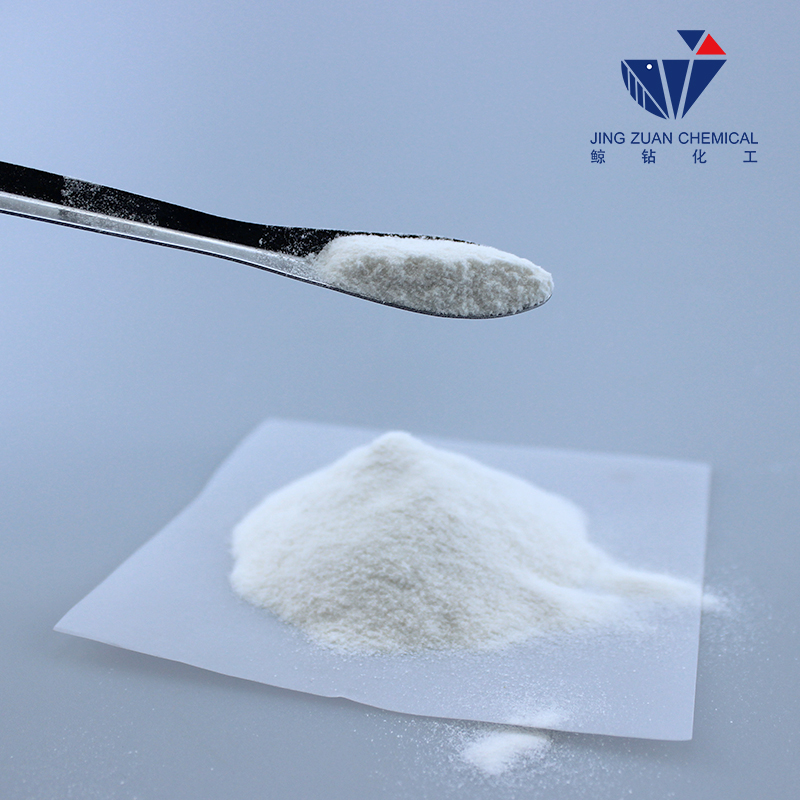
| Appearance | White to off-white powder | Free-flowing, odorless |
| Methoxy (%) | 19.0 - 24.0 | Impacts solubility & viscosity |
| Hydroxypropyl (%) | 4.0 - 12.0 | Controls film-forming properties |
| Viscosity (2% solution, cps) | 5 - 100000 | Customized grades available |
| pH (1% aqueous) | 5 - 8 | Neutral to slightly alkaline |
| Moisture content (%) | ≤5.0 | Important for stability |
If you think about it, that viscosity range alone shows how flexible HPMC is. You can find it in everything from low-viscosity grades that act as film-formers in tablet coatings, to high-viscosity types used for controlled-release gel matrices. This customization is one reason why manufacturers trust it repeatedly.
Comparing Leading HPMC Vendors
| Vendor | Purity (%) | Available Grades | Typical Applications | Price Range |
|---|---|---|---|---|
| Supplier A | 99.5 | Wide (5 to 100,000 cps) | Pharma, construction | $$$ |
| Supplier B | 99.0 | Moderate (10 to 40,000 cps) | Food, pharma | $$ |
| Supplier C | 98.5 | Narrow (20 to 10,000 cps) | Cosmetics, pharma | $ |
Of course, choosing a supplier isn’t just about specs or price. I’ve learned that reliability, local availability, and batch-to-batch consistency often matter just as much. A delay in supply or subtle variation in moisture content can seriously disrupt production lines—so a trusted partner can be a game-changer.
On the whole, if you’re involved in manufacturing tablets, films, adhesives, or any formulation requiring a dependable binder and viscosity modifier, HPMC excipient should definitely be on your procurement radar. The material feels like one of those quietly indispensable workhorses—you don’t always notice it, but the product just wouldn’t be the same without it.
To wrap up, here’s my two cents: Keep a close eye on those cellulose derivatives. They may not be glamorous, but they’re the backbone of surprisingly many products we use every day.
References:
- “Hydroxypropyl Methylcellulose (HPMC)” – Technical Data Sheet, CNJZ Chemical
- “Pharmaceutical Polymers and Excipient Technology,” Journal of Industrial Materials, 2022
- Smith, J. “Cellulose Derivatives in Drug Formulation,” Pharma Today, 2020
After all these years around industrial formulations, I’d say excipients like HPMC remind us that sometimes, it’s the quiet complexity that delivers the real value...
-
Understanding Hydroxypropyl Methyl Cellulose MSDS Safety and Compliance
NewsApr.16,2026
-
Understanding the Hydroxypropyl Methyl Cellulose HS Code for Global Trade
NewsApr.09,2026
-
Comprehensive Guide to Hydroxypropyl Methyl Cellulose CAS Number and Applications
NewsApr.07,2026
-
Comprehensive Guide to Hydroxypropyl Methyl Cellulose cas no and its Diverse Applications
NewsApr.04,2026
-
Comprehensive Guide to Hydroxypropyl Methyl Cellulose Manufacturers and Applications
NewsMar.31,2026
-
Understanding Hydroxypropyl Methyl Cellulose Properties And Diverse Applications
NewsMar.28,2026