You know, these days everyone’s talking about lightweight, high-strength materials. It’s all the rage. Seems like just yesterday we were hauling around tons of steel, and now it’s all carbon fiber and composites. Honestly, though, a lot of folks get caught up in the specs and forget about what actually happens on the construction site. You can have the strongest material in the world, but if it’s a pain to work with, it’s useless.
I’ve seen so many designs that look good on paper, but fall apart the second you try to actually build something. For example, these snap-fit connectors... they’re great in theory, but try snapping them together with gloves on in the middle of winter. Forget about it. It’s always the little things that trip you up.
The Rising Demand for Specialized Polymers
Have you noticed how everyone wants everything to be faster, lighter, and more efficient? It’s driving a huge demand for specialized polymers like Hydroxyethyl Cellulose (HEC) and Hydroxypropyl Methylcellulose (HPMC). Used to be, we just grabbed whatever cement additive was cheapest. Now, everyone’s got specific requirements. It’s a good problem to have, I guess, but it also means you gotta really understand what you’re dealing with.
It’s not just construction, either. The demand’s coming from all over – paints, coatings, pharmaceuticals, even the cosmetics industry. It's strangely diverse. I encountered a paint manufacturer in Malaysia last time who was obsessed with the thixotropic properties of HEC, it’s all about that smooth application.
Understanding HEC and HPMC: Beyond the Jargon
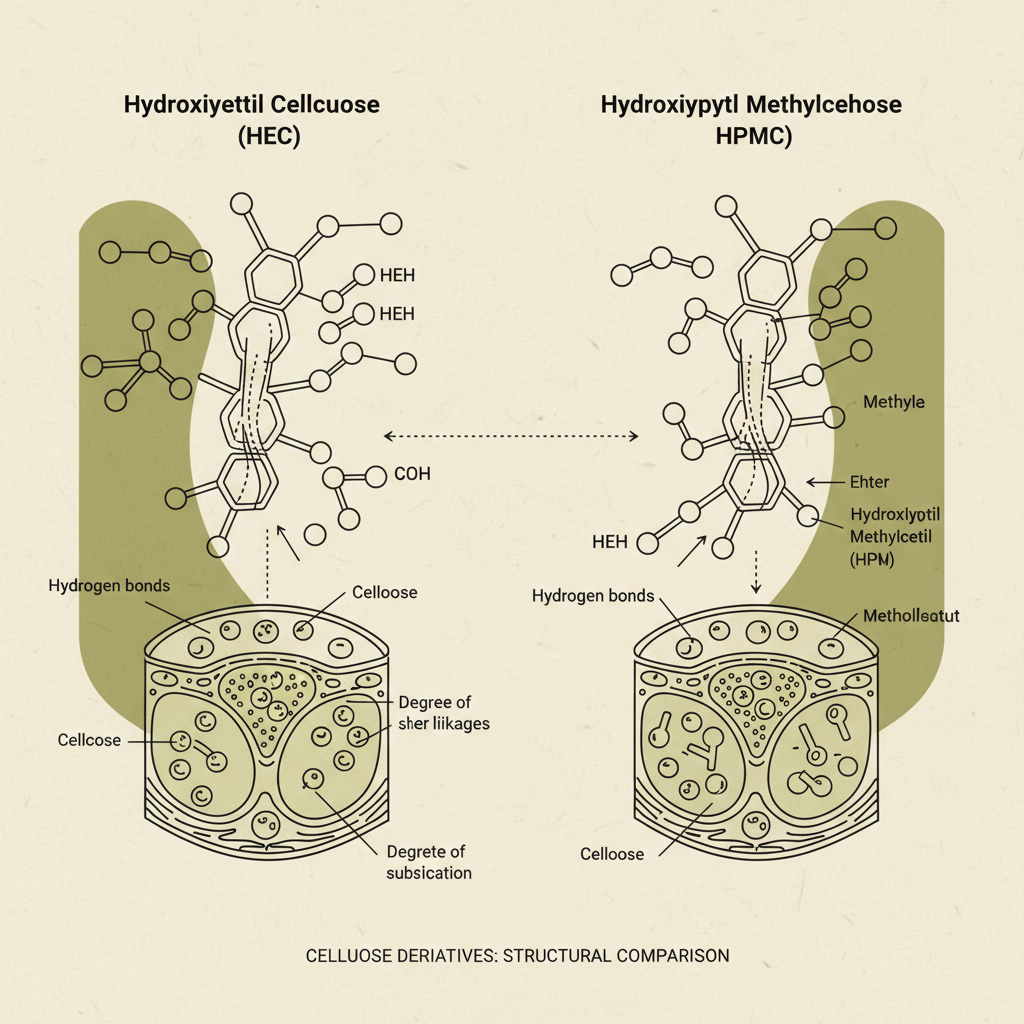
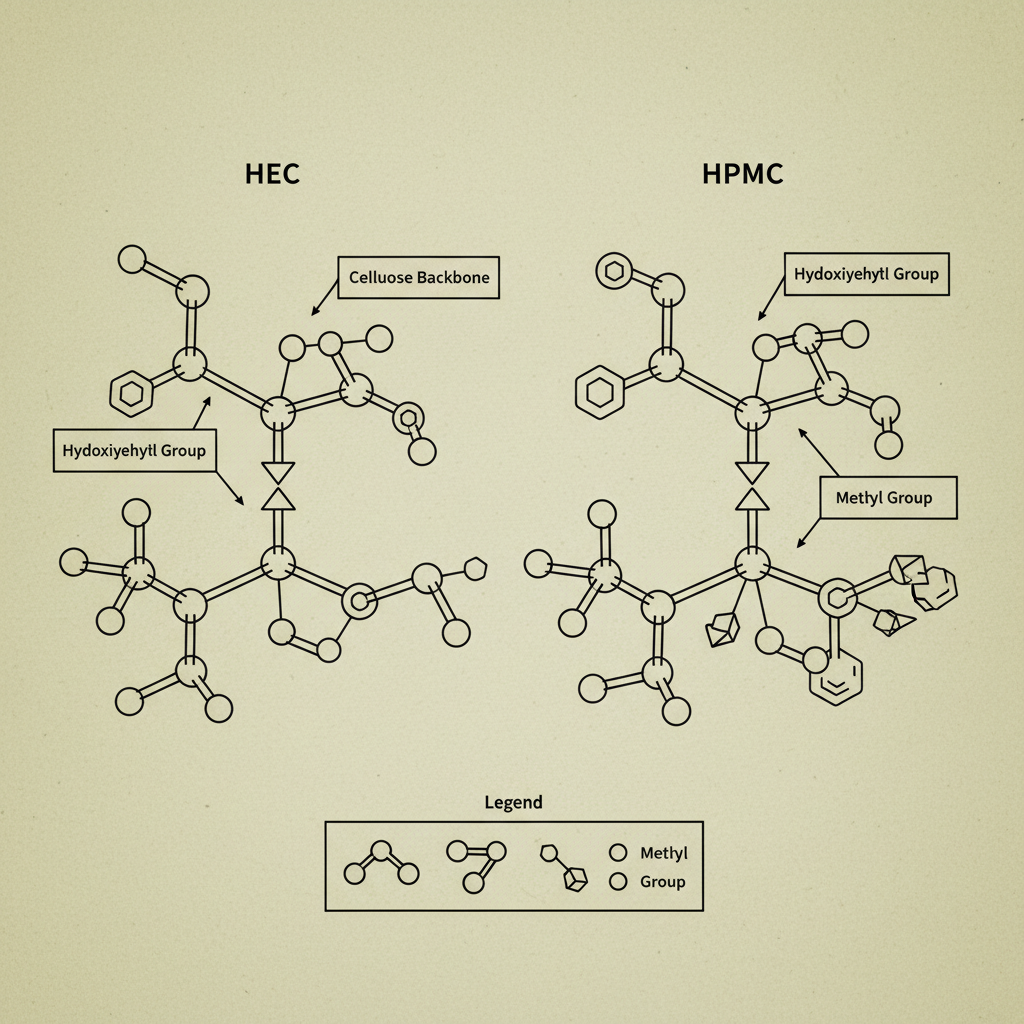
Okay, let’s break it down. HEC and HPMC are both cellulose ethers, meaning they're made from cellulose – basically, plant fiber. But the key difference is in how they're modified. HEC has hydroxyethyl groups attached, while HPMC has both hydroxypropyl and methyl groups. Sounds technical, right? It is. But what it boils down to is how these modifications affect their properties. HPMC smells kinda sweet, almost like vanilla, I remember my grandma used to use something similar for baking.
These aren’t materials you just chuck in a mixer and hope for the best. They're about controlling flow, thickening, water retention… a whole lot of things that impact the final product. And, to be honest, a lot of guys on the site still don’t really understand why they’re using it, just that the foreman told them to.
It's essential for modern construction practices and even the creation of essential healthcare products.
Key Differences: Viscosity, Water Retention, and Application
The biggest difference? Viscosity. HPMC generally creates a higher viscosity than HEC at the same concentration. That means it's better for applications where you need a thicker, more stable mixture. Think tile adhesives or cement-based renders. It’s like comparing honey to water, basically.
Water retention is another big one. HPMC holds onto water much better than HEC, which is crucial in hot, dry climates. If your mortar dries out too quickly, it won’t cure properly, and you’ll end up with cracks. I've seen entire buildings have to be re-done because of this. It's a real headache. And a huge expense.
Application-wise, HEC is often used in paints and coatings where a lower viscosity and better film formation are desired. HPMC shines in construction materials where water retention and workability are paramount. Anyway, I think understanding these core differences is key to choosing the right polymer for the job.
Global Applications: From Construction to Cosmetics
It's everywhere, seriously. In construction, you'll find HPMC in self-leveling compounds, tile adhesives, and cement-based plasters. HEC is used in joint compounds and texture coatings. Outside construction, HEC is a key ingredient in many paints, inks, and even some food products. I didn’t even know that until I started digging into this stuff.
I’ve seen it used in post-disaster relief efforts to stabilize slopes and prevent landslides. It’s amazing how something so seemingly simple can make such a difference. In remote industrial zones, these polymers help with dust control, which is a huge safety issue.
Comparison of HEC and HPMC Performance
Advantages and Long-Term Value Proposition
The benefits are pretty clear: improved workability, better water retention, increased adhesion, and enhanced durability. Strangely, sometimes the biggest advantage is just reducing waste. If your mortar doesn’t dry out too quickly, you use less material overall. That adds up.
But it’s not perfect. HPMC can be more expensive than HEC, and it can be sensitive to certain salts. It's a trade-off. The long-term value is in reducing maintenance costs and extending the lifespan of structures. A well-built structure with the right additives will last for decades, saving money in the long run.
Future Trends and Customization Options
Everyone’s talking about sustainability now, and that’s pushing demand for bio-based cellulose ethers. They're trying to find ways to produce these polymers using more renewable resources. Also, there’s a lot of research going into customizing these polymers for specific applications.
For example, last month, that small boss in Shenzhen who makes smart home devices insisted on changing the interface to , and the result was a batch of devices that wouldn’t connect properly. He wanted a slightly modified HPMC blend to improve the adhesive strength for attaching the components, but he didn’t fully understand the impact on the overall curing time. It was a mess. It just shows you that customization requires a deep understanding of the chemistry involved.
Real-World Performance and Challenges
Look, these polymers are great, but they’re not magic. They still need to be handled properly. Mixing ratios are critical. You can’t just throw a handful of HPMC into a bucket of cement and expect it to work. You need to follow the instructions. And, honestly, a lot of guys on site don’t bother. They just wing it.
Another challenge is quality control. There are a lot of cheap, low-quality products out there. You get what you pay for. I've seen HPMC that clumps up instantly and won't dissolve properly. It’s a disaster. Later... Forget it, I won't mention it.
Ultimately, proper testing is essential. It’s not enough to just rely on the manufacturer’s specs. You need to test the material in real-world conditions. Put it through the paces. See how it performs under stress.
Summary of HEC vs. HPMC Performance Characteristics
| Property |
HEC Performance |
HPMC Performance |
Typical Applications |
| Water Retention |
Moderate |
Excellent |
Cement-based renders, tile adhesives |
| Viscosity |
Lower |
Higher |
Paints, coatings, self-leveling compounds |
| Thermal Stability |
Good |
Very Good |
High-temperature applications |
| Cost |
Generally Lower |
Generally Higher |
Cost-sensitive projects |
| Film Formation |
Moderate |
Good |
Protective coatings |
| Sensitivity to Salts |
Less Sensitive |
More Sensitive |
Marine environments, saline soils |
FAQs
Generally, HEC tends to be the more cost-effective option compared to HPMC. This is primarily due to the different manufacturing processes and raw material costs. However, it's crucial to consider that the overall project cost isn’t solely based on material price. Factors like the required performance characteristics, potential rework, and long-term durability also contribute significantly. Sometimes, spending a bit more upfront on HPMC can save you money down the line.
While technically possible, it's rarely a straightforward substitution. HPMC's superior water retention and workability properties often make it the preferred choice for concrete mixes, especially in demanding applications. If you were to substitute HEC, you might need to adjust the water content and potentially other additives to achieve the desired consistency and performance. It’s not recommended without thorough testing and consultation with a materials engineer.
Temperature plays a significant role. High temperatures can accelerate the hydration process in cement-based materials, reducing the effectiveness of HEC and HPMC if not properly accounted for. HPMC generally demonstrates better thermal stability, maintaining its viscosity and water retention capabilities over a wider temperature range. However, both polymers can degrade at extremely high temperatures, impacting their performance.
Both HEC and HPMC powders can be irritants to the eyes, skin, and respiratory system. It's essential to wear appropriate personal protective equipment (PPE), including safety glasses, gloves, and a dust mask, when handling these materials. Ensure adequate ventilation in the work area and avoid creating dust clouds. In case of contact, rinse thoroughly with water and seek medical attention if irritation persists.
The search for more sustainable alternatives is ongoing. Some manufacturers are exploring bio-based cellulose ethers derived from renewable sources. Modified starches and guar gum are also being investigated as potential replacements, although they often don’t offer the same level of performance. The “greenest” option depends on a comprehensive life-cycle assessment, considering factors like sourcing, production, and biodegradability.
Proper storage is crucial for maintaining the performance of HEC and HPMC. Store the powders in a cool, dry, and well-ventilated area, away from direct sunlight and moisture. Keep containers tightly sealed to prevent absorption of humidity. Avoid storing them near strong oxidizing agents or chemicals. Following the manufacturer’s storage recommendations will maximize the shelf life and ensure consistent quality.
Conclusion
So, there you have it. HEC and HPMC are powerful tools, but they're not one-size-fits-all solutions. Understanding the nuances, the trade-offs, and the real-world applications is what separates a good builder from a great one. It’s about knowing when to use which polymer, how to handle it properly, and what to expect from it.
Ultimately, whether this thing works or not, the worker will know the moment he tightens the screw. And that's the honest truth. You can talk specs and certifications all day, but at the end of the day, it's about getting the job done right. If you’re looking for a reliable supplier or have any questions, feel free to visit our website: cnjzchemical.com